
Vitamin A Explained Simply: Benefits, Food Sources & Deficiency Sign
A simple, reader-friendly guide to Vitamin A—its key benefits for vision, immunity, skin, and gut health, how much you need, best food sources, deficiency signs, and easy Ayurvedic tips for better absorption.
Vitamin A — The Vitamin of Vision, Immunity & Inner Glow
If there is one nutrient that quietly protects your body every single day, it's Vitamin A.
Most people know it as the vitamin for healthy eyesight. But its role goes far beyond helping you see clearly.
Vitamin A helps protect the delicate surfaces of your eyes, skin, lungs, and digestive tract—the body's natural barriers against the outside world. It supports healthy immunity, helps tissues grow and repair, and plays an important role in maintaining healthy skin.
One of its best-known jobs is helping your eyes adjust to dim light, which is why it is often called the vitamin of vision. But in many ways, Vitamin A is also the vitamin of protection, growth, and resilience.
How Your Body Uses Vitamin A
Eating foods rich in Vitamin A is only the beginning. Once absorbed, your body carefully converts this nutrient into forms it can use wherever they are needed.
These active forms—retinol, retinal, and retinoic acid—quietly support many essential functions, including healthy vision, immunity, growth, and the renewal of skin and other tissues.
Most of the Vitamin A your body absorbs is stored safely in the liver. Think of your liver as a wise storehouse, releasing just the right amount whenever your body needs it.
Here's something many people don't realise:
A blood test may appear normal even when your body's Vitamin A stores are gradually running low. Vitamin A deficiency usually becomes obvious in blood tests only after the liver's stores have been significantly depleted.
That's one reason why eating Vitamin A-rich foods regularly is far more effective than waiting until a deficiency appears.
Where Does Vitamin A Come From?
Vitamin A reaches your body in two different ways.
1. Active Vitamin A (Retinol)
This is the ready-to-use form of Vitamin A. Your body absorbs it easily without needing to convert it first.
Good sources include:
Eggs
Liver
Fish (such as salmon, mackerel, herring, tuna, and sardines)
Dairy foods including milk, curd (yogurt), cheese, butter, and ghee
2. Provitamin A (Beta-Carotene)
Plants don't contain active Vitamin A. Instead, they provide beta-carotene, which your body converts into Vitamin A as needed.
Good sources include:
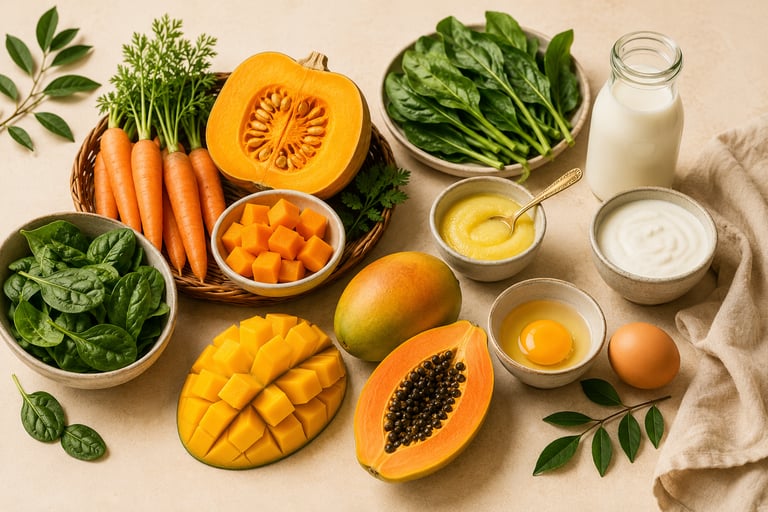
Carrots
Pumpkin
Sweet potatoes
Mangoes
Papayas
Spinach and other dark green leafy vegetables
What About Fortified Foods?
Some everyday foods have Vitamin A added during manufacturing to help prevent deficiency. These are called fortified foods. They can be a useful source of Vitamin A, especially when natural dietary intake is low, but they are different from foods that naturally contain the vitamin.
Common examples include:
Fortified milk
Fortified breakfast cereals
Fortified plant-based milks (soy, almond, or oat)
Swasti Reminder
Nature often leaves gentle clues.
The deeper the orange, yellow, or green colour of a fruit or vegetable, the richer it is likely to be in protective plant pigments such as beta-carotene.
Pair colourful vegetables with a small amount of healthy fat, such as ghee, coconut oil, or olive oil. Because Vitamin A is fat-soluble, this helps your body absorb it more effectively.
a colourful plate of Vitamin A-rich foods.
Did You Know?
1. Your Thyroid Helps Your Body Use Vitamin A
Did you know that your thyroid plays a role in how your body uses Vitamin A?
Your body converts the beta-carotene found in colourful fruits and vegetables into Vitamin A. When the thyroid is underactive, this conversion may become less efficient.Including foods that naturally contain Vitamin A—such as eggs, dairy products, fish, and liver—can help ensure adequate Vitamin A intake as part of a balanced, varied diet.
This doesn't mean plant foods are ineffective. Most people can continue to meet their Vitamin A needs through a varied diet rich in colourful fruits and vegetables.
2. Healthy Digestion Helps You Get the Most from Vitamin A
Vitamin A is a fat-soluble vitamin, so healthy digestion plays an important role in how well your body absorbs it. Ongoing digestive problems such as bloating, frequent diarrhoea, or conditions that reduce fat absorption can make it harder to obtain enough Vitamin A, even when your diet is good.
3. Nature Often Provides Vitamin A Through the Seasons
Ayurveda teaches us to notice nature's quiet wisdom. As the seasons change, so do the fruits and vegetables that become naturally abundant.
Summer: Mangoes and papayas provide beta-carotene while also adding freshness and hydration to the diet.
Winter: Carrots, pumpkin, and dark green leafy vegetables naturally become plentiful, helping to nourish the body during the colder months.
Choosing seasonal foods is one of Ayurveda's simplest ways to enjoy variety, freshness, and natural nourishment throughout the year.
Why Your Body Loves Vitamin A
Vitamin A works quietly behind the scenes every day, helping your body stay healthy in ways you may never notice—until you don't get enough of it.
It helps to:
Strengthen your immune system, helping your body defend itself against infections.
Support healthy vision, especially in dim light and after long hours of screen use.
Keep your skin healthy, supporting its natural repair and resilience.
Protect the delicate linings of your eyes, nose, lungs, and digestive tract, which act as your body's first line of defence.
Support normal growth, cell renewal, reproductive health, and healthy bones, especially during periods of growth and repair.
Early Signs You May Not Be Getting Enough Vitamin A
Your body often gives gentle clues long before a deficiency becomes severe. Watch for signs such as:
Difficulty seeing in dim light or at night
Dry, irritated, or easily tired eyes
Dry or rough skin
Frequent infections, especially of the respiratory tract
Slow wound healing
Poor growth in children (when deficiency is prolonged)
These symptoms can have many different causes and don't always mean you have a Vitamin A deficiency. If you notice several of them or they persist, it's worth discussing them with a healthcare professional.
A Note on Safety
Vitamin A is a fat-soluble vitamin, which means your body stores it for future use. While this is helpful, taking large amounts of Vitamin A supplements over time can cause the vitamin to build up in the body.
Extra care is needed if you are:
Pregnant or planning a pregnancy
Taking high-dose Vitamin A supplements or cod liver oil regularly
Eating liver frequently (as it is naturally very rich in Vitamin A)
Post-menopausal and using long-term Vitamin A supplements
Vitamin A from colourful fruits and vegetables is generally very safe because your body converts only as much beta-carotene as it needs. If you are considering Vitamin A supplements, it's best to take them only when advised by a healthcare professional.
Did You Know?
A few gentle facts about Vitamin A that many people don't hear about:
Cod liver oil contains both Vitamin D and Vitamin A. If you're taking it regularly, avoid adding extra Vitamin A supplements unless advised by your healthcare professional.
Vitamin A and Vitamin D work best in balance. Taking very high doses of Vitamin A supplements over long periods may interfere with Vitamin D's role in supporting healthy bones. More isn't always better.
True nourishment is rarely about one nutrient alone. Your body thrives when different nutrients, healthy digestion, and balanced daily habits work together.
Ayurveda's Perspective on Vitamin A
Many foods that are naturally rich in Vitamin A have long been valued in Ayurveda for supporting vision, nourishing the tissues, and contributing to vitality. These qualities reflect the broader principles of Rasayana, where long-term health is built through wholesome food, healthy digestion, and balanced living.
Frequently Asked Questions
Can I use retinol creams during the day?
Retinol can make your skin more sensitive to sunlight. It is generally best applied at night, followed by sunscreen during the day. If you have sensitive skin or are pregnant, seek advice from your dermatologist or healthcare professional before using retinol products.
Does Vitamin A in skincare count as the same as the Vitamin A in food?
Not exactly. Vitamin A in foods nourishes your body through digestion, while retinoids in skincare act mainly on the skin where they are applied. They serve different purposes, although they belong to the same family of compounds.
Can everyday skincare products contain Vitamin A?
Yes. Some creams, serums, and anti-ageing products contain forms of Vitamin A, such as retinol or retinaldehyde. Reading the ingredient list can help you understand what you're applying to your skin.
Swasti Practical Wisdom
Small daily habits often make the biggest difference.
Add a spoon of ghee to cooked carrots, pumpkin, or leafy greens when appropriate. Because Vitamin A is fat-soluble, a little healthy fat helps your body absorb it better.
Follow the 20-20-20 rule during screen time: every 20 minutes, look at something about 20 feet away for 20 seconds. It gives your eyes a chance to rest.
Trust the seasons and enjoy the colourful fruits and vegetables they naturally bring. Seasonal eating is one of Ayurveda's simplest ways to nourish the body.
Include Vitamin A-rich foods such as carrots, pumpkin, leafy greens, mangoes, and papayas regularly in simple, home-cooked meals.
Keep your digestion warm, regular, and peaceful. Ayurveda teaches that healthy Agni helps the body make the most of every meal.
Good health is rarely built by one nutrient alone. Vitamin A is one important piece of the larger picture of balanced nutrition. Through simple food choices, healthy digestion, and mindful daily habits, you can support your body's natural ability to see clearly, protect itself, and thrive.
Disclaimer
This article is for informational and educational purposes only. It is not a substitute for medical advice, diagnosis, or treatment.
Please consult a qualified healthcare professional or your trusted medical practitioner for personalised guidance, especially if you have existing health conditions, are pregnant, or are taking supplements or medications.
swastiayurvedaofficial@gmail.com
+919995356463
About us
Dr. Neethu Mithun
Ayurvedic Physician (BAMS, MD) ·
Founder, Swasti Ayurveda